







Implementing partner:

During the largest climate disaster in the history of Rio Grande do Sul – the floods of May 2024 – Instituto Justiça (IJ) mobilized to act with agility and solidarity. In partnership with various stakeholders, more than 2,000 tons of emergency donations were collected and distributed, benefiting 40,000 people among the 2.4 million affected by the tragedy.

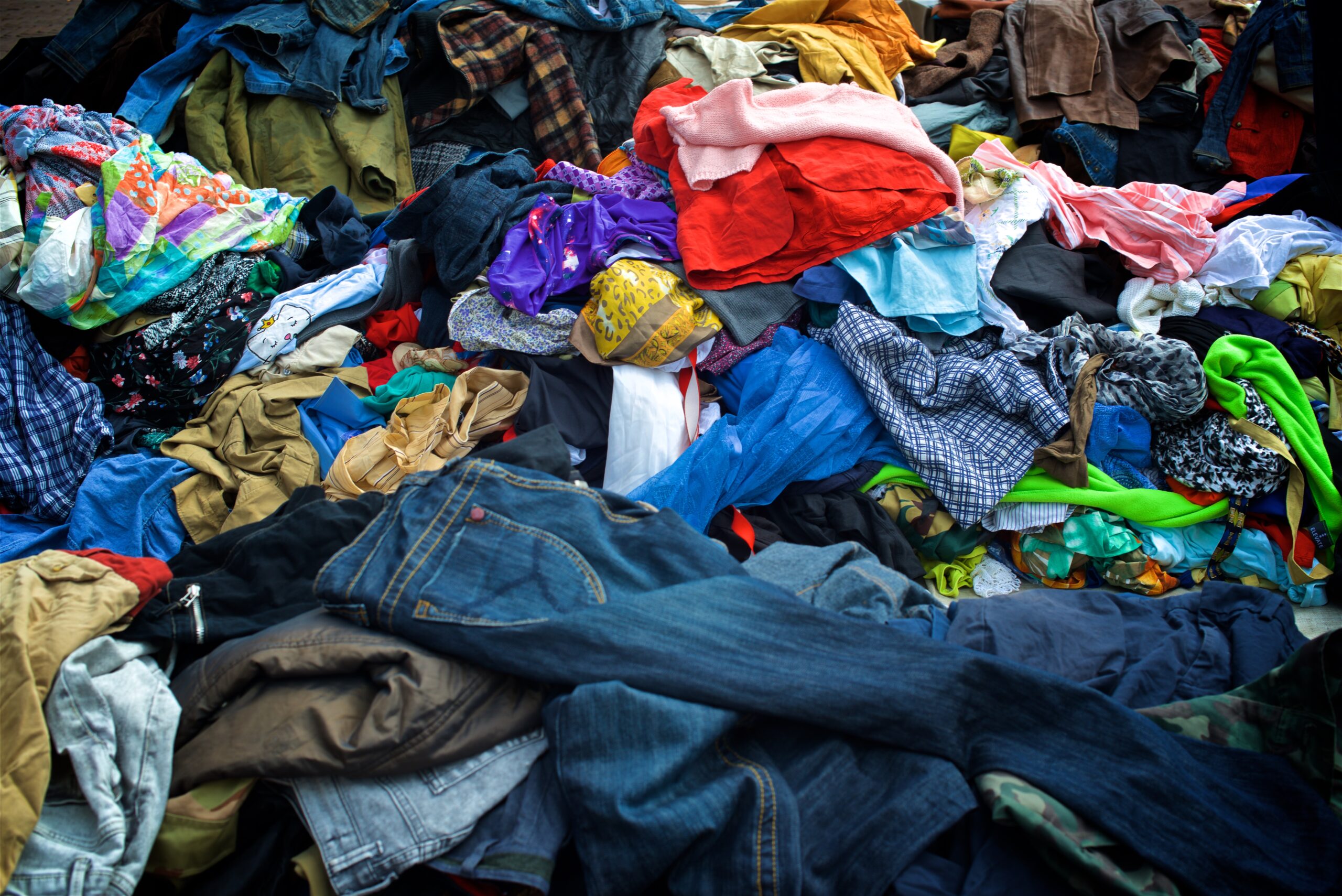
However, in light of the large volume of donated clothing, a new challenge emerged: an excess of items unsuitable for use, which would inevitably be discarded in landfills. It was in this context that Recria-se was born, a creative, sustainable, and transformative response to an environmental and social crisis.

Depoimentos

  • When we were in RS distributing the donations, we looked at that mountain of clothes and asked ourselves what we could do so that it wouldn’t become even more waste. It was exactly at that moment that Recria-se was born.

    Indiara Dias de Souza
    Founder and General Director of Instituto Justiça

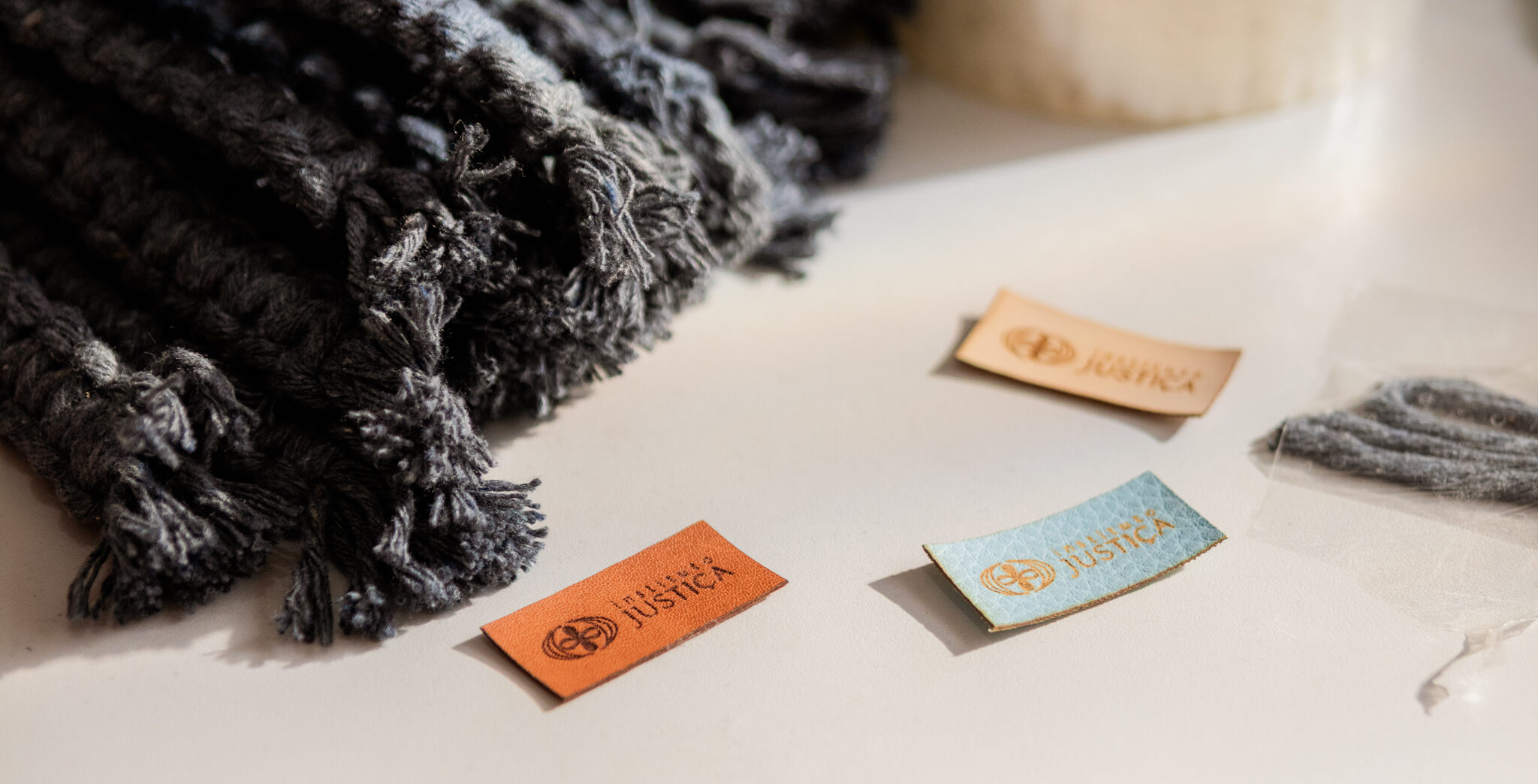
Conceived by Instituto Justiça and carried out in partnership with Ciclo Reverso — a company specializing in the circular economy and productive inclusion — Recria-se transforms textile waste into sustainable products, while simultaneously promoting income generation, training, and the empowerment of women.

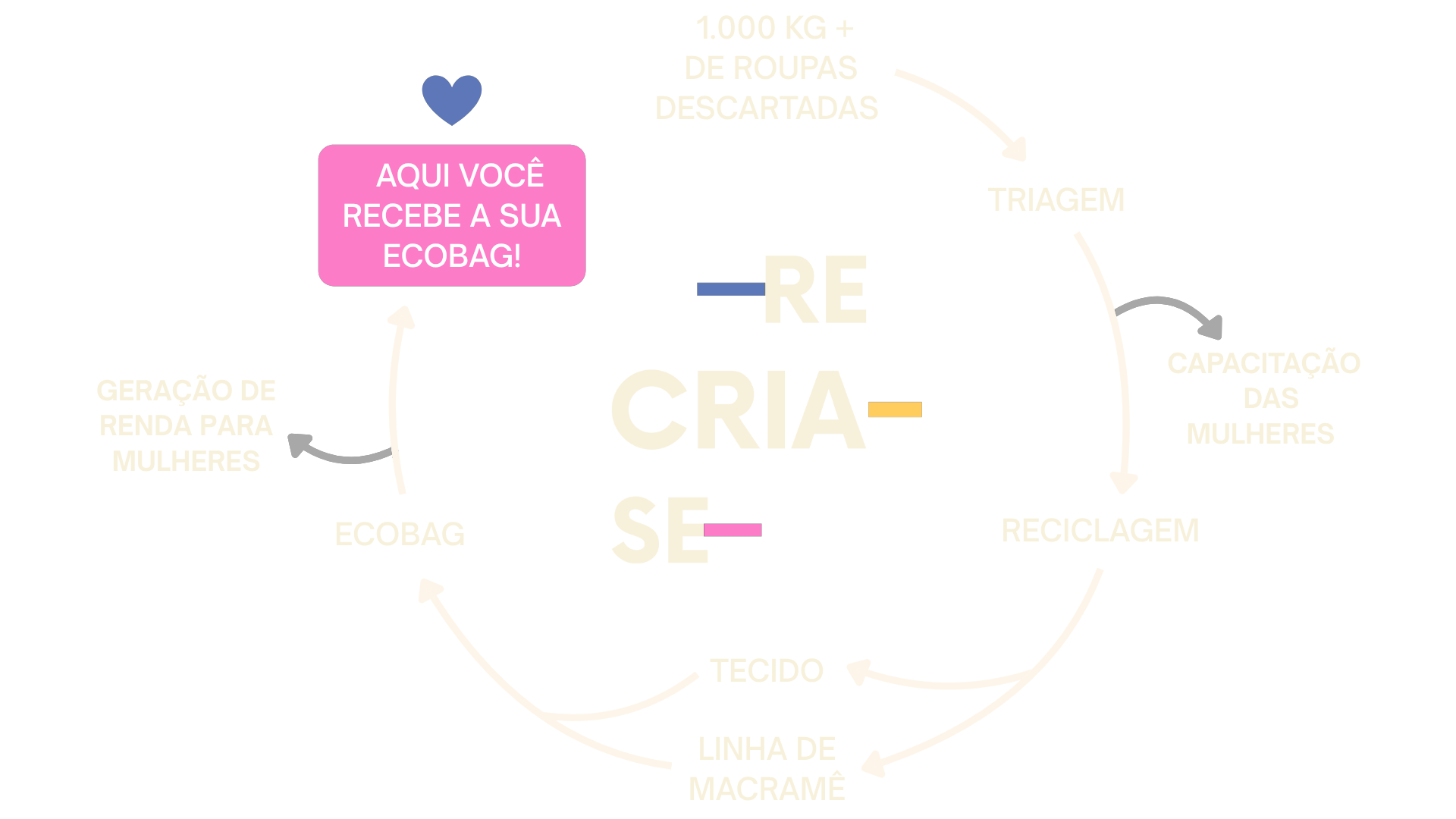
The project began with 1 ton of clothing unfit for use, resulting in more than 3,000 meters of recycled fabric, which served as raw material for the production of tote bags, pouches, bags, and other purpose-driven products.

Each item goes through a sorting process, and anything that cannot be transformed into fabric — such as zippers and buttons — is removed and sent to a cement plant, where it is used in cement production.

From the first ton, Recria-se converted 980 kg into recycled fabric and sent 20 kg to the cement plant.

Impacts

1,5 ton
Recycled
waste

64
Women
impacted

R$ 112,7 mil
Dignified income
generated

21,3 ton
Avoided CO₂
emissions

4,4 M
Liters of
water saved

Updated on: 05/01/2026

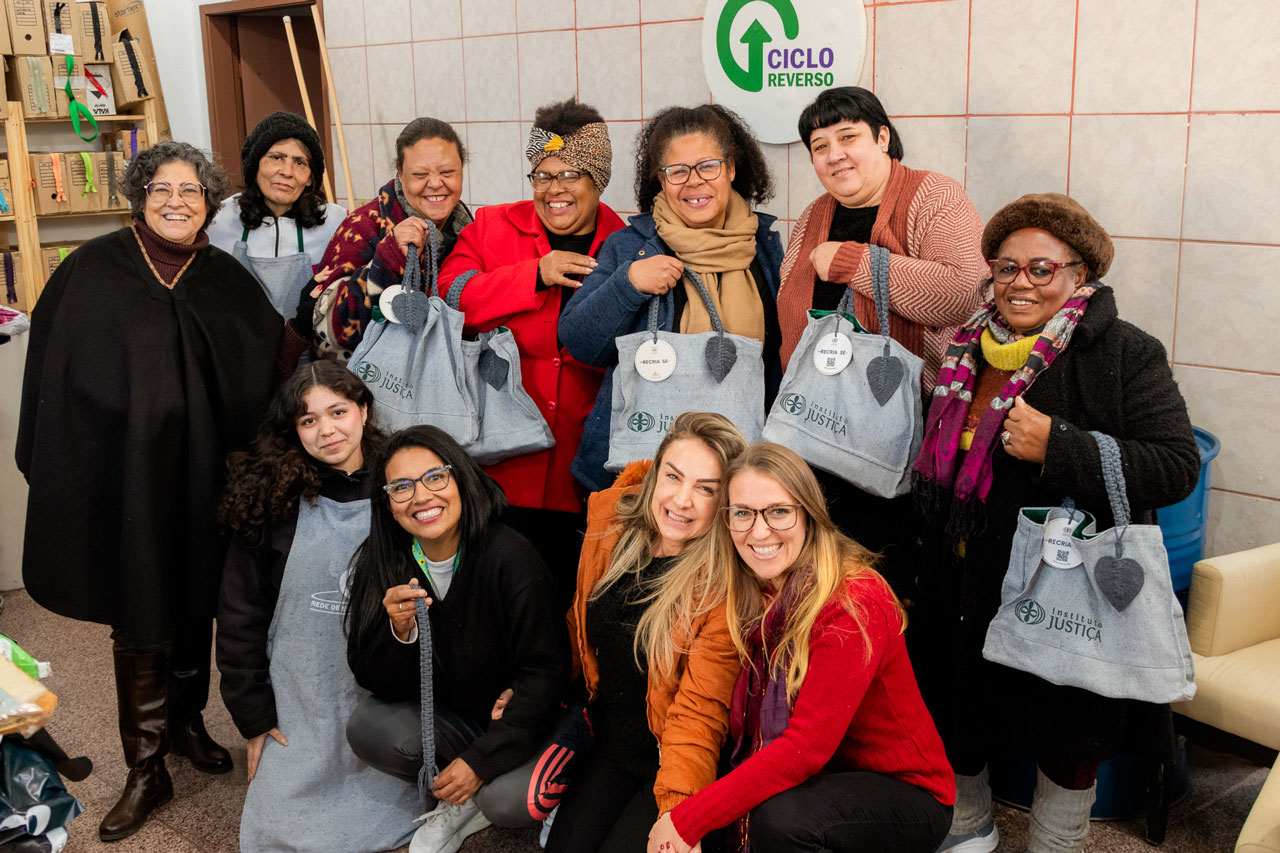
To manufacture the products, the project employs women from vulnerable communities in RS who are unemployed and face difficulties entering the job market for various reasons.

Trained in cutting, sewing, and macramé, they learned new skills to work directly in the production process, being able to carry out most of the activities in their own homes and at schedules compatible with their routines, gaining a new source of income and improved self-esteem.

The benefits also include other psychosocial aspects: at Recria-se, they find a safe, inclusive environment, entirely made up of women, where friendships are formed and the exchange of experiences builds a sense of community.

Depoimentos

  • “It is incredible to observe the collective growth, the community, and at the same time the personal development and individual fulfillment that this process makes possible. The impact on the mental health of many there is enormous, and some report that the work is therapeutic for them.”

    Liliane Linhares
    Ciclo Reverso

  • Recria-se helped me regain hope that things would improve and provided me with significant professional development. I learned to make products I never imagined I would be capable of. I also see how it changed the lives of many colleagues who were unable to work due to family issues and now, with the flexibility brought by the project, can engage in paid work and recover their self-esteem.

    Regina Moura
    Seamstress of Recria-se.

The greater the volume of items sold, the greater the number of women impacted and the amount of waste recycled.

Every piece delivered by Recria-se is a new possibility.
Shall we recreate together?

Contact Instituto Justiça and develop customized products that carry your brand and are full of purpose.

Sustainable Development Goals (SDGs)

Strategic partners

Discover our projects